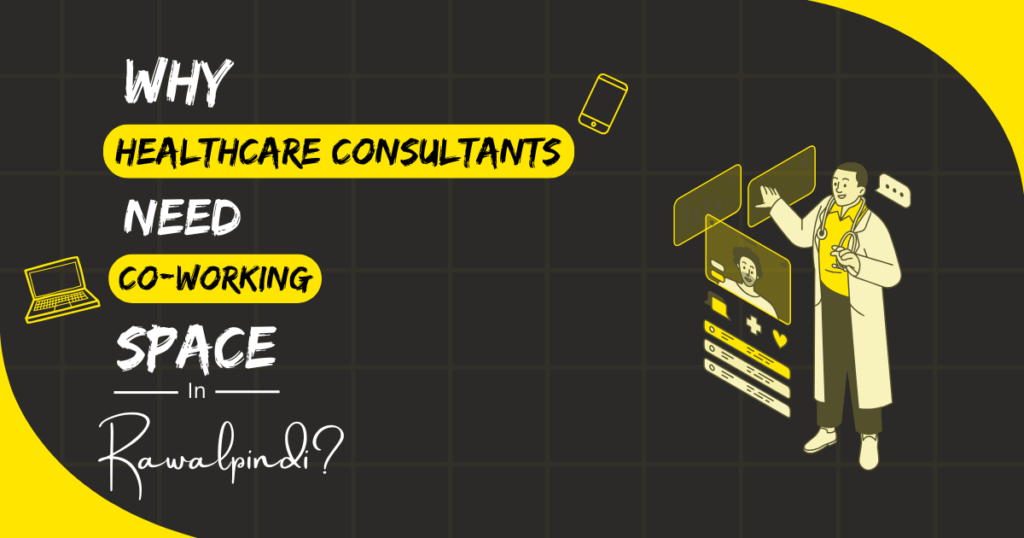
Healthcare consulting has become an increasingly important field in Rawalpindi, with professionals advising hospitals, clinics, pharmaceutical companies, and insurance providers on operations, compliance, and digital health strategies. Understanding why healthcare consultants need coworking spaces in Rawalpindi is becoming more important, as this work relies heavily on meetings, reports, video consultations, and secure communication.
Many consultants initially work from home, but as their client base grows, challenges such as privacy concerns, unreliable internet, and limited professional meeting spaces can affect service quality and client confidence.
This is one of the key reasons why healthcare consultants need coworking spaces in Rawalpindi. Coworking spaces provide private and professional environments with reliable infrastructure, meeting facilities, and networking opportunities that help consultants work more efficiently while maintaining confidentiality and a strong professional image.
Challenges Healthcare Consultants Face Working From Home
Healthcare consulting involves a level of confidentiality and professional credibility that goes beyond most other consulting fields, given the sensitivity of patient data and the regulatory environment hospitals and clinics operate under. A home office, while convenient, often falls short in several important ways.
Confidentiality Risks When Discussing Sensitive Health Data
Healthcare consultants frequently work with case studies, compliance reports, or operational data that reference patient information, even if indirectly. Reviewing this material or discussing it over a call from a shared living space increases the risk of accidental exposure, which can damage client trust and, in some cases, breach confidentiality agreements.
Unreliable Internet for Telehealth and Video Consultations
A growing share of healthcare consulting work happens over video, whether it’s a telehealth advisory session, a compliance review call, or a strategy meeting with a hospital’s leadership team. A dropped connection or poor audio quality during one of these calls can come across as unprofessional and disrupt time-sensitive discussions.
No Suitable Space for Client Meetings with Hospitals and Clinics
Meeting hospital administrators, clinic owners, or pharmaceutical representatives at home is rarely appropriate, and public spaces like cafés don’t offer the privacy these conversations often require. Without access to a proper meeting room, consultants may struggle to present findings, negotiate contracts, or build the kind of trust that healthcare clients expect.
Difficulty Maintaining a Credible Professional Image
Healthcare institutions tend to be cautious about who they bring in as consultants, particularly for projects involving compliance, patient safety, or sensitive operational data. Operating entirely from a home office, without a professional address or proper meeting facilities, can make it harder to be taken seriously during the early stages of a client relationship.
Isolation From the Wider Healthcare and Business Network
Much of the healthcare consulting field runs on referrals and reputation, whether that’s a hospital administrator recommending a consultant to a peer institution or a chance conversation that leads to a new project. Working alone from home limits these everyday interactions that often lead to new opportunities.
These challenges don’t mean a home-based consulting practice can’t work, particularly for those just starting out or working with a small number of long-term clients. But as a healthcare consultant takes on more sensitive projects, works with larger institutions, or wants to grow their client base, the limitations of a home office tend to become harder to manage. A setup that felt perfectly adequate while advising one clinic can quickly feel out of step once a consultant starts working with multiple hospitals or handling recurring compliance reviews.
How Coworking Spaces Solve These Challenges
Coworking spaces designed for professional use can directly address the confidentiality, reliability, and credibility challenges that healthcare consultants face when working from home.
Private Spaces for Confidential Discussions
Enclosed offices and soundproof meeting rooms give healthcare consultants a proper setting to review sensitive case data, discuss compliance findings, or hold confidential calls without the risk of being overheard. This matters significantly in a field where discretion is often part of the professional obligation to clients.
Reliable Internet and Backup Power for Telehealth Calls
Business-grade internet and backup power reduce the risk of a dropped connection during a telehealth advisory session or an important client presentation. For consultants whose work depends on consistent video quality, this reliability can directly affect how professional and dependable they appear to clients.
Professional Meeting Rooms for Client Presentations
Access to a well-equipped meeting room allows healthcare consultants to present findings, walk through compliance reports, or negotiate engagements in a setting appropriate for hospital administrators and other healthcare decision-makers. A polished environment can meaningfully strengthen a consultant’s credibility during these conversations.
A More Credible Professional Presence
A dedicated business address and access to professional facilities help healthcare consultants present themselves as established and dependable, which matters when building trust with hospitals, clinics, and other healthcare institutions that are often cautious about bringing in outside advisors.
Access to a Broader Professional Network
Coworking spaces frequently host a mix of professionals, including healthcare startups, medical technology companies, and other consultants. Being part of this environment creates natural opportunities for referrals, partnerships, and introductions that are harder to come by while working alone from home.
Which Healthcare Consulting Roles Benefit the Most From Coworking Spaces?
While most healthcare consultants can benefit from a dedicated workspace, some roles rely even more heavily on privacy, reliable connectivity, and a professional setting to do their work effectively.
Healthcare Management Consultants
Management consultants often review sensitive operational and financial data for hospitals and clinics, making a private, professional workspace important for both confidentiality and client presentations.
Telemedicine and Telehealth Consultants
Telehealth consultants depend on consistent video quality and a quiet setting to advise clients or support the rollout of remote care programs without technical disruptions.
Medical Billing and Coding Consultants
Billing and coding consultants regularly handle detailed financial and patient-related records, requiring a secure, distraction-free environment to maintain accuracy and confidentiality.
Healthcare Compliance and Quality Consultants
Compliance consultants often discuss sensitive audit findings or regulatory gaps with hospital leadership, making private meeting rooms essential for these conversations.
Health IT and Digital Health Consultants
Health IT consultants advising on electronic records systems or digital health tools need reliable internet and a professional setting to demonstrate platforms and coordinate with technical teams.
Pharmaceutical and Medical Affairs Consultants
Consultants working with pharmaceutical companies often meet with medical professionals and institutional clients, making a credible, well-equipped workspace valuable for maintaining strong professional relationships.
Regardless of specialization, healthcare consultants who handle sensitive data, meet regularly with institutional clients, or want to expand their practice can benefit from the privacy, reliability, and professional image that coworking spaces provide.
Is a Coworking Space Worth the Cost for Healthcare Consultants?
For an independent healthcare consultant, a coworking membership might initially seem like an unnecessary expense. But in a field where trust, discretion, and professional credibility directly influence client relationships, the value often extends well beyond the cost of the membership itself. Unlike many other consulting fields, a single lapse in confidentiality or a poorly run telehealth session can carry consequences that go beyond an awkward moment, making the investment worth weighing carefully rather than dismissing outright.
Reduced Risk of Confidentiality Breaches
A private, professionally managed workspace lowers the chance of sensitive health or compliance data being seen or overheard by the wrong person. For a consultant whose reputation depends on discretion, avoiding even one such incident can be worth far more than the monthly membership fee.
A More Credible Image With Healthcare Institutions
Hospitals, clinics, and pharmaceutical companies tend to prefer working with consultants who present themselves professionally. Meeting in a proper office setting, rather than a home office or a public café, can strengthen a consultant’s credibility and improve the chances of securing larger engagements.
Networking and Business Growth Opportunities
Coworking spaces create regular opportunities to meet other professionals, some of whom may become referral sources, collaborators, or even clients themselves. In a field that relies heavily on trust and word-of-mouth, these connections can meaningfully support long-term business growth.
Why the Investment Often Pays Off
If a coworking space helps a healthcare consultant secure even one additional institutional client, avoid a confidentiality misstep, or run telehealth sessions more reliably, the membership cost is usually easy to justify against the value gained.
Working From Home vs Coworking Space
Both options have their place, depending on the size of a consultant’s practice and the sensitivity of the work involved. The comparison below highlights the differences that matter most for healthcare consultants specifically.
| Feature | Working From Home | Coworking Space |
| Confidentiality | Difficult to guarantee privacy for sensitive health data discussions. | Private offices and soundproof rooms suited for confidential conversations. |
| Internet Reliability | Depends on home connection, which can affect telehealth call quality. | Business-grade internet supports consistent video consultations. |
| Power Backup | Limited unless a UPS or generator is purchased separately. | Backup power typically included, reducing disruption during calls. |
| Client Meetings | Often limited to home offices, cafés, or virtual-only interactions. | Access to professional meeting rooms suited for institutional clients. |
| Professional Image | May raise questions with cautious healthcare institutions. | Dedicated business address and polished setting build client trust. |
| Networking | Limited exposure to other healthcare and business professionals. | Regular contact with other consultants, startups, and potential referral partners. |
| Work-Life Balance | Work and personal life often overlap. | Clear separation supports healthier, more sustainable routines. |
| Monthly Cost | Lower direct cost, but may limit growth and credibility. | Membership fee covers workspace, internet, utilities, and shared amenities. |
| Best For | Solo consultants with a small, established client base. | Growing practices serving hospitals, clinics, and institutional clients. |
For a consultant just starting out with one or two long-term clients, working from home may still be practical. But as the practice grows to include institutional clients, telehealth work, or sensitive compliance projects, a coworking space tends to offer a stronger foundation for both credibility and day-to-day reliability.
How to Choose the Right Coworking Space for Healthcare Consultants
Not every coworking space is well suited to the confidentiality and professionalism healthcare consulting requires. A few factors are worth evaluating carefully before signing up.
Prioritize Privacy and Confidentiality Features
Look for private offices or fully enclosed meeting rooms rather than open desk areas, especially for reviewing sensitive case data or holding client calls. Ask whether the facility offers soundproofing, since this directly affects how confidential a conversation can realistically be.
Check Internet Quality and Power Backup
Reliable internet is essential for telehealth calls and video consultations. Ask about internet speed, backup connections, and whether the facility has a UPS or generator to prevent disruptions during an important session.
Evaluate Meeting Room Quality and Availability
Confirm that meeting rooms are properly equipped for video calls and in-person presentations, with good lighting, minimal outside noise, and reliable screen-sharing capability. This matters directly for how a consultant’s work is received by hospital administrators and other institutional clients.
Consider the Location and Surrounding Professional Community
A coworking space located conveniently near hospitals, clinics, or business districts can reduce travel time for in-person meetings. It’s also worth asking whether the space hosts other healthcare-related businesses or professionals, since this can open the door to useful referrals and partnerships over time.
Conclusion
As healthcare consulting continues to grow as a profession in Rawalpindi, the workspace a consultant operates from plays a meaningful role in how their work is trusted and received. Working from home often comes with confidentiality risks, unreliable internet for telehealth calls, and no proper space to meet institutional clients, all of which can hold back an otherwise strong consulting practice.
A coworking space addresses these gaps by offering private, professional facilities, reliable infrastructure, and a setting that supports the kind of trust healthcare institutions expect from outside consultants. It also opens the door to a wider professional network that can lead to referrals, partnerships, and long-term business growth.
The right coworking space is one that supports confidentiality, reliability, and professionalism in equal measure. Taking the time to compare a few options, ask about privacy features and internet quality, and consider the surrounding professional community can help a healthcare consultant choose a workspace that strengthens both day-to-day work and long-term client relationships. In a field where reputation often travels faster than any marketing effort, the right workspace can quietly become one of a consultant’s most valuable assets.
Frequently Asked Questions
Are coworking spaces appropriate for handling sensitive healthcare data?
Coworking spaces with private offices and soundproof meeting rooms can be a reasonable setting for discussing sensitive healthcare information, though consultants should still follow their own confidentiality practices and avoid reviewing sensitive material in open, shared areas.
How much do coworking spaces cost in Rawalpindi?
Pricing varies depending on the provider, membership type, and included amenities, with options ranging from day passes and hot desks to dedicated desks and private offices. Comparing what’s included in each plan can help a consultant find a setup that matches their budget and client load.
Can a coworking space support telehealth or telemedicine consulting work?
Yes, coworking spaces with reliable internet and private meeting rooms are generally well suited for telehealth advisory calls, offering a quiet, professional setting that’s difficult to replicate at home or in a public space.
What should a healthcare consultant look for before choosing a coworking space?
Beyond price and location, it’s worth confirming privacy features, internet reliability, meeting room quality, and whether the space is convenient for meeting hospital or clinic clients in person when needed.
Is a private office necessary, or is a shared desk enough for a healthcare consultant?
It depends on the nature of the work. A shared desk can work for general research or administrative tasks, but reviewing sensitive case data or holding client calls involving patient information is usually better suited to a private office or enclosed meeting room.